As winter withdraws and the first signs of spring emerge, millions of people across the world celebrate Nowruz, the Persian New Year. In the Persian calendar, this year marks 2585, a number that reflects not just the passage of time, but the depth of a civilization that has endured for millennia.
Nowruz—meaning “new day”—begins precisely at the moment of the vernal equinox, when day and night become equal. This astronomical precision has anchored the celebration for over 3,000 years, making it one of the oldest continuously observed traditions in human history.
A Celebration Rooted in Nature
Unlike many modern holidays that are tied to fixed dates, Nowruz is inseparable from nature. It is a celebration of balance, renewal, and rebirth—mirroring the transformation of the earth itself.
Spring is not just a season in Nowruz philosophy; it is a metaphor:
- for new beginnings
- for growth after hardship
- for hope after darkness
In year 2585, this symbolism feels more relevant than ever. Across generations and geographies, Nowruz continues to represent resilience—the idea that renewal is always possible.
The Haft-Seen: A Table of Meaning
At the heart of Nowruz is the Haft-Seen table, a carefully arranged display of seven symbolic items, each beginning with the Persian letter “S” (س). These elements represent fundamental aspects of life:
- Sabzeh (sprouts) – rebirth and growth
- Samanu (sweet pudding) – strength and abundance
- Senjed (dried fruit) – love and wisdom
- Seer (garlic) – health and protection
- Seeb (apple) – beauty and vitality
- Somaq (sumac) – sunrise and patience
- Serkeh (vinegar) – aging and acceptance
Alongside these, you often find a mirror (reflection), candles (light), painted eggs (fertility), and sometimes a book of poetry or wisdom—bridging the material and the spiritual.
Traditions That Connect Generations
Nowruz is not a single-day event; it unfolds over a series of rituals that prepare both the home and the spirit:
- Khaneh Tekani (spring cleaning): a symbolic clearing of the past
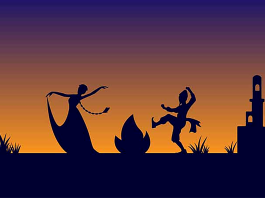
- Chaharshanbe Suri: a fire festival where people jump over flames, leaving behind negativity
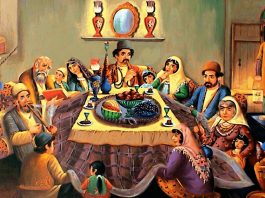
- Family visits: strengthening bonds across generations
- Nature Day (Sizdah Bedar): spending the 13th day outdoors to conclude the celebration
These traditions are not merely cultural habits—they are structured practices designed to reset life emotionally, socially, and spiritually.
Nowruz Beyond Borders
While deeply rooted in Iranian heritage, Nowruz transcends modern political boundaries. It is celebrated in parts of Central Asia, the Caucasus, the Middle East, and diaspora communities worldwide.
In today’s interconnected world, Nowruz has evolved into a global cultural phenomenon, recognized by international institutions and embraced by diverse communities. Yet, at its core, it remains profoundly Persian—carrying forward language, poetry, and identity.
Nowruz 2585: A Symbol of Renewal
The year 2585 is more than a number—it reflects continuity with an ancient past and optimism for the future. Nowruz has survived empires, revolutions, and global transformations, adapting without losing its essence.
In a time when the world faces uncertainty and rapid change, Nowruz offers a timeless reminder:
- that renewal is inevitable
- that light follows darkness
- and that cultures rooted in meaning endure
Final Reflection
Nowruz is not just a celebration—it is a philosophy of life. It invites us to pause, reflect, and begin again.
Whether you celebrate it in Tehran, Montreal, or anywhere else in the world, Nowruz 2585 carries the same message it always has:
A new day has arrived. What you choose to do with it is the true beginning.